How Mayonnaise Is Made in Industry with Industrial Mixing Tanks
How Mayonnaise Is Made in Industry: A Comprehensive Guide Using Industrial Mixing Tanks
Mayonnaise, a creamy and tangy condiment, is a staple in kitchens and food industries worldwide. While making mayonnaise at home involves a whisk and a bowl, industrial production relies on advanced equipment to ensure consistency, scalability, and shelf stability. The industrial mixing tank is central to this process, enabling large-scale blending and emulsification, while mixing equipment refines the texture and quality.
The Importance of Industrial Mixing Tanks
Industrial mayonnaise production requires precision to create a stable emulsion of oil, egg, vinegar, and seasonings. An industrial mixing tank is a robust vessel equipped with agitators or high-shear mixers, designed to handle large volumes while ensuring uniformity. Supporting mixing equipment, such as homogenizers or high-shear mixers, enhances the process by delivering a smooth, creamy texture. Together, the industrial mixing tank and mixing equipment streamline production, meeting commercial demands for quality and efficiency.
Ingredients for Industrial Mayonnaise
To produce mayonnaise, the following ingredients are typically used:
Oil: The primary component (70–80%), often soybean or canola oil.
Egg: Liquid egg yolk or whole egg for emulsification.
Vinegar or Lemon Juice: Adds tanginess and preserves.
Water: Adjusts viscosity.
Salt and Sugar: Enhances flavor.
Mustard: Optional for flavor and emulsification stability.
Additives: Stabilizers (e.g., xanthan gum) or preservatives for shelf life.
These ingredients are combined in an industrial mixing tank to create a stable, creamy emulsion.
Step 1: Preparing the Aqueous Phase
The process begins in an industrial mixing tank by preparing the aqueous phase. Water, vinegar, salt, sugar, and mustard (if used) are added to the industrial mixing tank. The industrial mixing tank's agitator blends these ingredients thoroughly, dissolving solids and creating a uniform liquid base. This step, performed in the industrial mixing tank, ensures the emulsification process starts smoothly.
Supporting mixing equipment, such as a low-speed paddle mixer within the industrial mixing tank, prevents splashing and maintains consistency. The industrial mixing tank is ideal for this initial stage due to its large capacity and precise control.
Step 2: Adding Egg for Emulsification
Next, liquid egg yolk or whole egg is introduced into the industrial mixing tank. Eggs act as the emulsifier, allowing oil and water to combine into a stable mixture. The industrial mixing tank's agitator gently mixes the egg with the aqueous phase to avoid breaking the emulsion before oil is added.
The industrial mixing tank maintains a controlled environment, ensuring the egg is evenly distributed. High-quality mixing equipment within the industrial mixing tank, such as a variable-speed mixer, allows operators to adjust agitation for optimal blending.
Step 3: Emulsifying with Oil
The critical step in mayonnaise production is emulsifying the oil, done in the industrial mixing tank. Oil is slowly added to the industrial mixing tank while the mixing equipment—often a high-shear mixer integrated into the industrial mixing tank—operates at high speeds. This creates tiny oil droplets that disperse evenly, forming a thick, creamy emulsion.
The industrial mixing tank's high-shear mixing equipment is key, as it generates the intense forces needed for a stable emulsion. The process takes 10–20 minutes in the industrial mixing tank, depending on batch size. The industrial mixing tank ensures the emulsion remains consistent across thousands of liters.
Step 4: Refining Texture with Mixing Equipment
To achieve the smooth, glossy texture of commercial mayonnaise, additional mixing equipment is often used. A homogenizer or standalone high-shear mixer, sometimes paired with the industrial mixing tank, further refines the emulsion. This step, supported by mixing equipment, reduces droplet size for a silkier mouthfeel.
The industrial mixing tank may continue gentle agitation to maintain uniformity, while mixing equipment ensures no lumps or separation. This combination of the industrial mixing tank and specialized mixing equipment delivers a premium product.
Step 5: Adjusting Consistency and Flavor
After emulsification, the mayonnaise's viscosity and flavor are fine-tuned in the industrial mixing tank. If the mixture is too thick, water or vinegar is added gradually while the industrial mixing tank mixes. If too thin, stabilizers like xanthan gum are incorporated using the industrial mixing tank's agitator or mixing equipment.
Taste tests are conducted, and seasonings are adjusted in the industrial mixing tank. The industrial mixing tank ensures even incorporation, maintaining quality across the batch. Mixing equipment like high-shear mixers may be used briefly to blend additives smoothly.
Step 6: Pasteurization for Shelf Stability
To ensure safety and extend shelf life, mayonnaise is pasteurized in the industrial mixing tank. The industrial mixing tank, equipped with a steam jacket, heats the mixture to 165–185°F (74–85°C) for a few minutes to kill bacteria. The industrial mixing tank's agitator prevents separation during heating.
After pasteurization, the industrial mixing tank cools the mayonnaise to ~100°F (38°C) using a cooling jacket, preserving texture and flavor. The industrial mixing tank's ability to handle both heating and cooling makes it essential for this step.
Step 7: Quality Control and Final Mixing
Before packaging, the mayonnaise undergoes quality checks in the industrial mixing tank. Operators verify:
PH: Target 3.5–4.5 for preservation.
Viscosity: Ensures spreadable consistency.
Taste and Texture: Meets brand standards.
If needed, the industrial mixing tank or mixing equipment performs a final mix to correct any inconsistencies. The industrial mixing tank ensures the product is uniform, while mixing equipment guarantees a polished finish.
Step 8: Packaging
The finished mayonnaise is transferred from the industrial mixing tank to a filling line, typically at 100–120°F (38–49°C) to maintain hygiene and create a vacuum seal upon cooling. The industrial mixing tank keeps the product agitated to prevent separation during transfer. Automated systems fill jars, bottles, or pouches efficiently.
Benefits of Industrial Mixing Tanks and Mixing Equipment
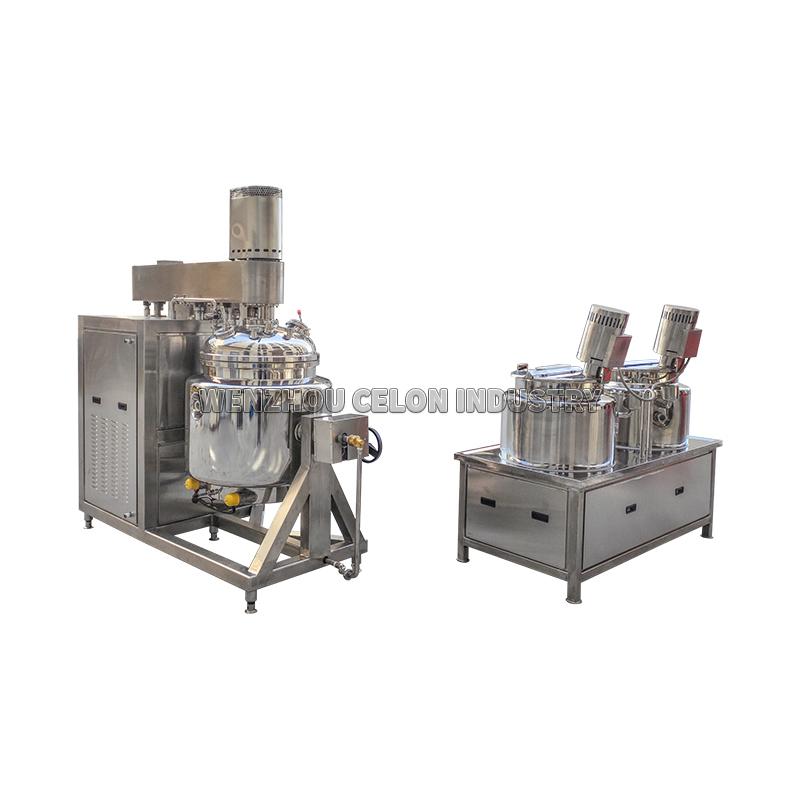
Industrial Mixing Tank: Combines blending, heating, cooling, and pasteurization in one unit, ideal for large-scale production. Its versatility reduces equipment costs and streamlines workflows.
Mixing Equipment: High-shear mixers and homogenizers ensure a stable emulsion and smooth texture, critical for competitive mayonnaise brands.
Celon's Advanced Range of Mixing Equipment for Your Mayonnaise Production

Celon, a leading manufacturer specializing in stirring and emulsifying tanks, offers an advanced range of industrial mixing tanks and mixing equipment tailored for mayonnaise production. Their industrial mixing tanks are designed with precision-engineered high-shear emulsifiers, ensuring stable oil-in-water emulsions with droplet sizes as small as 1–5μm, perfect for creamy, consistent mayonnaise. Celon's mixing equipment includes vacuum emulsifying tanks that minimize aeration, extending shelf life by reducing oxidation. These industrial mixing tanks feature stainless steel construction, GMP-compliant designs, and capacities from 50 to 5000 liters, catering to both small and large-scale producers. With integrated heating and cooling systems, Celon's industrial mixing tanks streamline pasteurization and temperature control, while their advanced mixing equipment ensures rapid hydration of stabilizers and uniform blending. Celon's solutions enhance efficiency, reduce waste, and deliver the high-quality texture demanded by commercial mayonnaise brands.
Conclusion
Producing mayonnaise in industry relies on the industrial mixing tank and mixing equipment to create a creamy, stable emulsion. From blending the aqueous phase to pasteurizing and packaging, the industrial mixing tank handles multiple steps with precision, while mixing equipment ensures a smooth, professional texture. This process, optimized by the industrial mixing tank, delivers high-quality mayonnaise at scale, meeting consumer and regulatory standards. Whether for a factory or a curious enthusiast, the industrial mixing tank and mixing equipment are the backbone of industrial mayonnaise production.